
Patio Cost Guide
How Much Does a Patio Cost in Plymouth MA?
A straightforward look at what drives patio pricing on the South Shore — and how to budget for your project.
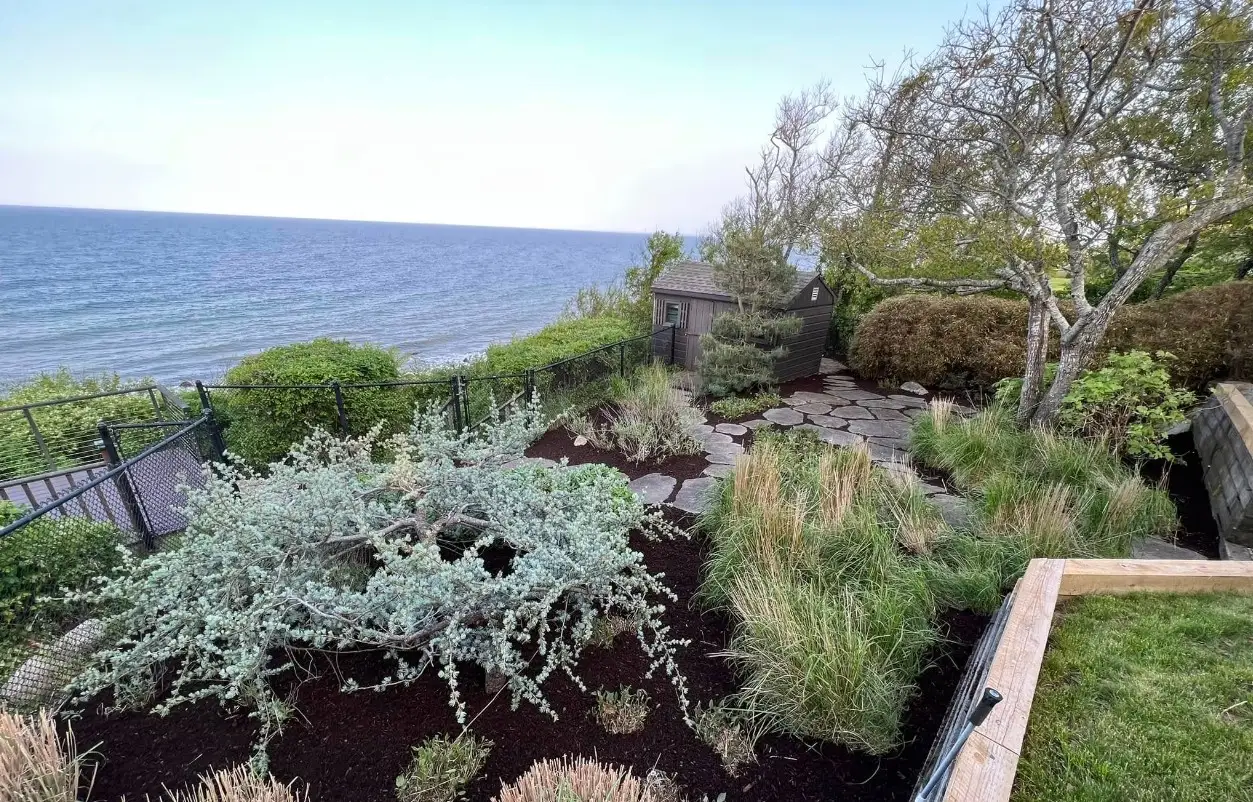
If you're thinking about adding a patio to your property in Plymouth, one of the first questions you probably have is: what will it actually cost? It's a fair question, and the honest answer is that it depends on several factors — the materials you choose, the size of the space, the condition of your yard, and how much site preparation is involved.
We install patios across Plymouth, Kingston, Duxbury, and the surrounding South Shore towns. Here's a practical breakdown of what goes into patio pricing in our area so you can plan with realistic numbers.
Typical Patio Cost Ranges
For the Plymouth MA area, here are the general price ranges you can expect for a professionally installed patio in 2026:
| Patio Type | Cost per Sq Ft | Typical 300 Sq Ft Patio |
|---|---|---|
| Concrete (poured) | $10 – $18 | $3,000 – $5,400 |
| Concrete pavers | $18 – $30 | $5,400 – $9,000 |
| Natural stone (bluestone, granite) | $28 – $45 | $8,400 – $13,500 |
| Permeable pavers | $22 – $35 | $6,600 – $10,500 |
These ranges include materials, labor, and basic site preparation. More complex projects — those involving grading, retaining walls, built-in seating, or fire pit areas — will land on the higher end or above these ranges.
Material Costs: What You're Paying For
Concrete pavers are the most popular choice we install in Plymouth. They come in a wide range of colors and patterns, hold up well to New England winters, and are straightforward to repair if a section ever shifts. Material cost alone typically runs $4 to $10 per square foot depending on the brand and style, with Belgard and Techo-Bloc being common options in our area.
Natural stone — especially bluestone and granite — gives you a distinct, high-end look that pairs well with the traditional architecture you see throughout the South Shore. Expect to pay more for the material itself ($8 to $18 per square foot), and the installation takes longer because each piece is cut and fitted individually.
Poured concrete is the most affordable option upfront. It's durable and functional, but it's more prone to cracking in our freeze-thaw climate and doesn't offer the same visual range as pavers or natural stone. Stamped or stained concrete can close that gap somewhat, though it adds to the cost.
Permeable pavers are worth considering if your property has drainage concerns, which is common close to the coast. They allow water to filter through rather than running off, which can reduce puddling and help with stormwater management. Plymouth's conservation regulations sometimes favor permeable solutions, especially on properties near wetlands or the harbor.
Labor: Where Most of the Cost Goes
Materials are only part of the equation. Labor and site preparation typically account for 50% to 65% of your total patio cost. Here's what that covers:
- Excavation and grading — Removing existing sod or soil and establishing the right slope for water runoff
- Base preparation — Compacting a gravel base layer (usually 6 to 8 inches) that provides structural stability
- Sand bedding and leveling — Creating a smooth, level surface for the pavers to sit on
- Paver installation — Laying, cutting, and fitting each piece to the design
- Edge restraints and polymeric sand — Locking everything in place so the patio stays tight over time
A well-built patio base is what separates a project that looks great for 20 years from one that starts settling and shifting after two winters. This is especially true in Plymouth, where the sandy, glacial soil drains quickly but can shift if a base isn't properly compacted.
Site Conditions That Affect Your Price
Every yard is different, and conditions specific to Plymouth and the South Shore can push costs up or down. Here are the factors that matter most:
Sandy Soil & Drainage
Plymouth sits on glacial outwash — sandy, well-draining soil that's easy to dig but can be unstable. If your property has particularly loose or shifting sand, we may need a deeper gravel base or geotextile fabric to prevent the patio from settling unevenly. Properties near the coast or the Plymouth Aquifer may also face higher water table issues seasonally.
Freeze-Thaw Cycles
Southeastern Massachusetts gets enough cold to freeze the ground but also enough coastal warming to thaw it repeatedly through winter. This cycle is hard on hardscaping. A properly built base with adequate depth (at least 6 inches of compacted gravel) is non-negotiable here. Skimping on base depth is the number one reason patios fail prematurely in our area.
Slope & Access
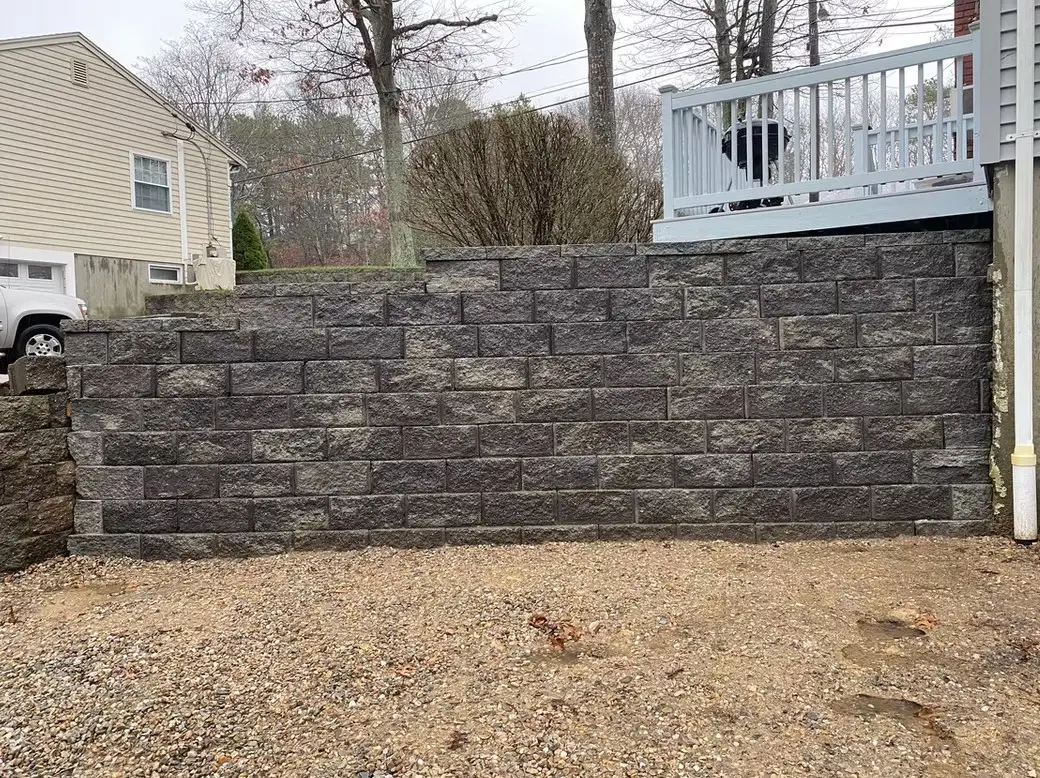
If your yard has a slope, you may need a retaining wall or stepped patio design to create a level surface. Limited access — a narrow side yard, no truck access to the backyard, steep grade from the driveway — can add to labor costs because materials need to be moved by hand or with smaller equipment.
Existing Landscaping
Removing an old patio, pulling out tree roots, or regrading around existing plantings adds time and cost. If there's an old concrete slab that needs to be broken up and hauled away, budget an extra $500 to $1,500 depending on size.
Size: The Biggest Cost Driver
A 200-square-foot patio (roughly 10 × 20 feet) fits a small table and chairs. A 300- to 400-square-foot patio gives you room for a full dining set, lounge area, or grill station. Larger spaces of 500 square feet and up can accommodate fire pits and multiple seating zones.
The per-square-foot price drops slightly as the patio gets larger because fixed costs — site prep, mobilization, edge work — get spread across more area. A 150-square-foot patio might cost $30 per square foot installed, while a 500-square-foot patio of the same material could come in closer to $22.
When to Get Estimates
The best time to reach out for a patio estimate in Plymouth is late winter or early spring — February through April. This lets you lock in scheduling before the busy season and gives time for design decisions, material ordering, and any permitting.
We take on patio projects from spring through late fall. For summer entertaining, getting an estimate by March or April is ideal. For fall installations, reaching out by July gives plenty of lead time.
When comparing estimates, make sure each quote specifies the base depth, paver brand and style, edge restraint type, and whether demolition or grading is included. The cheapest quote isn't always the best value — a thinner base or lower-grade paver will cost you more in repairs down the road.
Get a Realistic Number for Your Project
Every patio is different, and online calculators can only get you so far. The best way to know your cost is to have someone look at your specific yard — the soil, the slope, the access, and the layout you have in mind.
We offer free, no-obligation quotes for patio installations in Plymouth and the surrounding towns. You can reach out to schedule an on-site visit, or use our online estimator to get a quick ballpark figure before we come out.